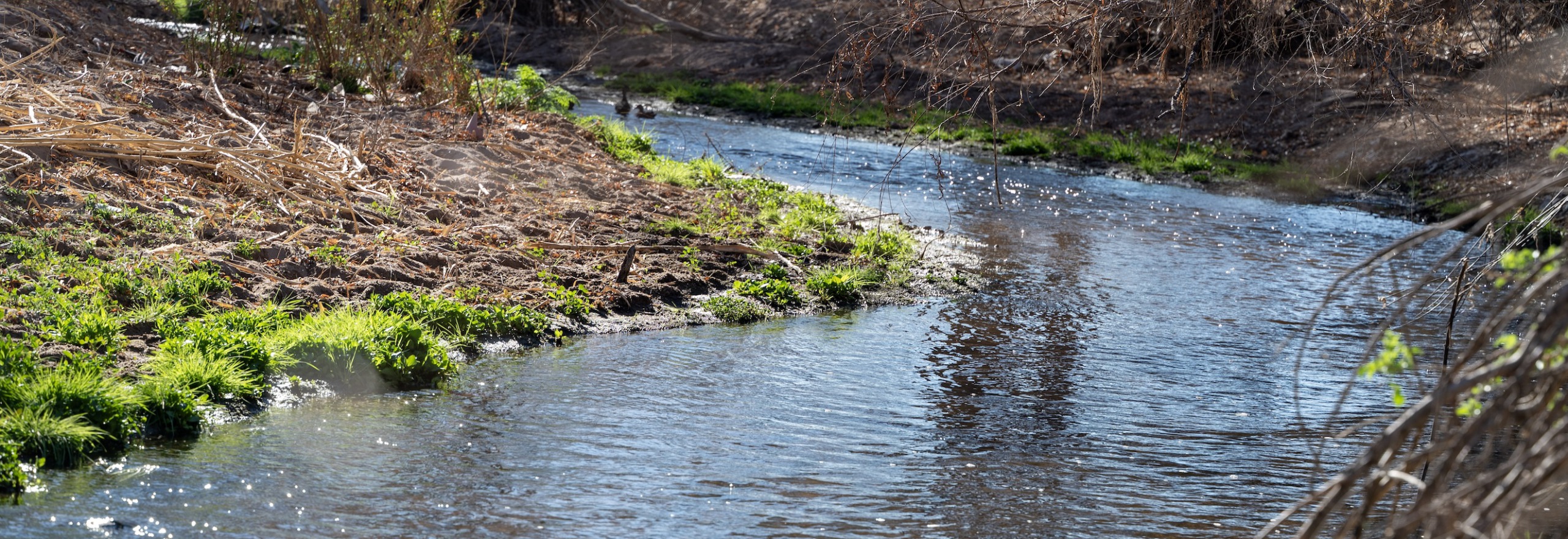
Treated wastewater from the Federally owned and operated Nogales International Wastewater Treatment Facility (NIWTP), located in Rio Rico, is the only reason the river flows much of the year from Rio Rico to Tubac. This facility must be maintained to the highest degree possible.
Why the river depends on effluent
The Santa Cruz River is challenged because natural surface flows ceased by the early 1900s due to decades of groundwater over-pumping and a prolonged regional mega-drought. Today, the river’s flow relies on highly treated wastewater (effluent) and seasonal monsoon rains. Without these recharging sources, the surface water vanishes into the sandy riverbed.
The Nogales Reach of the river benefits from effluent flows released at the NIWTP outfall, near the Santa Cruz River/Nogales Wash confluence, about 10 miles north of Nogales, Arizona. Until May 1, 2026 it treated approximately 15 million gallons of water daily, of which approximately 80 percent came from Mexico.
What changed on May 1, 2026
Mexico is now diverting more of their flow to their Los Alisos treatment plant. They are doing this to comply with Minute 276 of the 1944 Treaty, which limits their cross-border flow to 9.9 million gallons per day. For many years they have been sending flows more than the Minute 276 limit to the United States. This resulted in the NIWTP being over treatment capacity and Mexico incurring several million dollars in debt to the United States for unpaid treatment costs.
Since 1951, the US and Mexico have jointly managed effluent flow from Nogales, Sonora, to the NIWTP. A maximum limit of 9.9 million gallons per day was set on wastewater deliveries from Mexico, but no minimum was set. Effluent delivery has been prone to fluctuations, often surpassing the maximum limit by 30 to 126 percent due to population increase and heavy rainfall events. To address overflow, the Mexican government commissioned the Los Alisos Wastewater Treatment Plant in 2012, which treats a portion of the wastewater generated in Nogales, Sonora. Since Los Alisos began operations, effluent delivery to the NIWTP has dropped, with treated water now used in Sonora for agriculture and aquifer recharge through the Los Alisos River.
With no binational agreement in place on a minimum effluent delivery from Mexico, there are now uncertainties about future effluent flows, the environmental effects, and future recharge in the Santa Cruz Active Management Area.
What this looks like on the ground
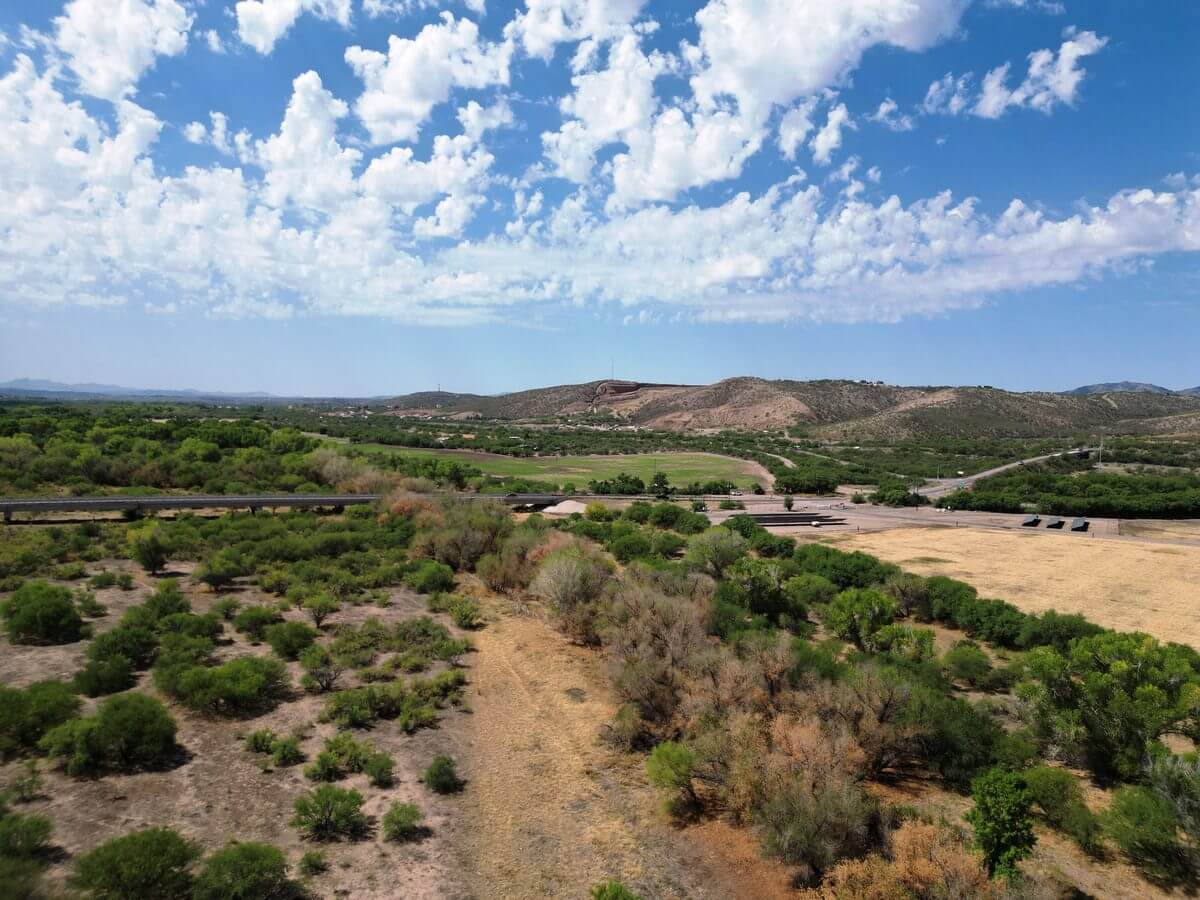
At the FOSCR RiverWatch in June, the river was dry starting from Ruby Road.
Your voice is needed
Because the Santa Cruz is classified as an endangered river, local groups like the Sonoran Institute and the Friends of the Santa Cruz River are actively working on water restoration projects to bring clean, perennial flows back to the area. Voicing public support for improvements to the NIWTP is one of the most direct ways you can help.