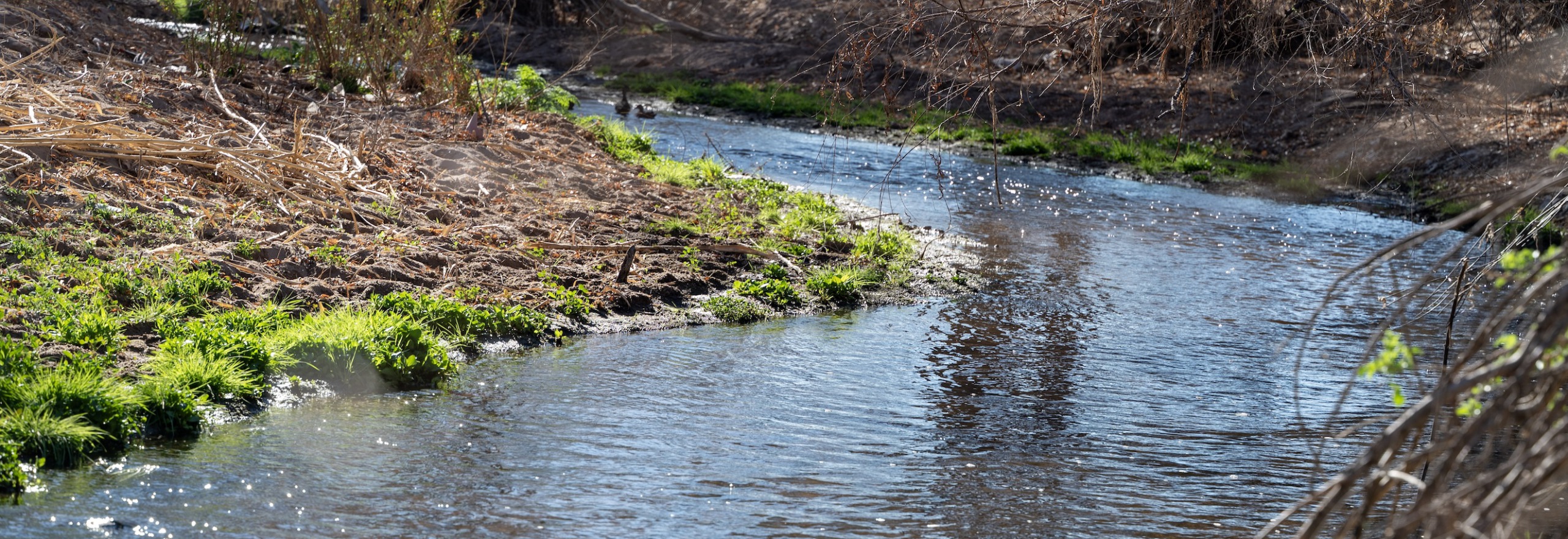

Avian sightings on the Santa Cruz

In a once-in-a-lifetime experience, I was startled by the dark, fierce glare of a falcon that stopped me dead in my tracks. I was breathless with excitement, completely captivated by its riveting intensity. More specifically, I was being stared down by a large Peregrine Falcon just before it lifted off into a nearby higher branch, wary of my unwelcome presence. This surprise encounter has been etched in my memory ever since it happened on the morning of October 3rd.
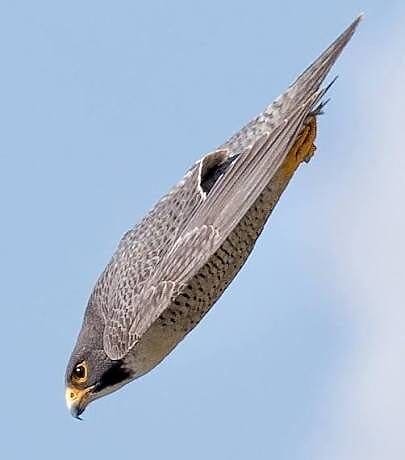
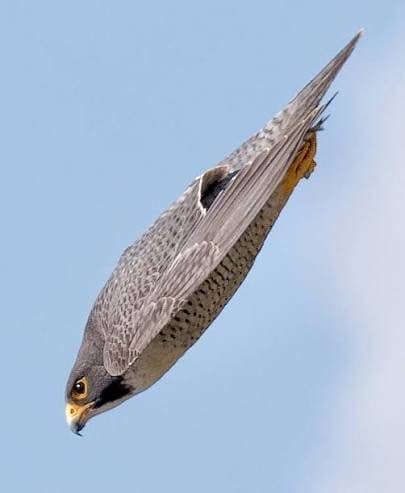
Peregrine Falcons are the fastest animals on Earth. In a dive from great heights, they can reach speeds of over 200 miles per hour, with one recorded diving record hitting a staggering 242 mph. They symbolize precision, clarity of vision, and power. For me personally, this falcon appeared during a time of great inner turmoil and tribulation. It felt as though the angels had placed a sentinel before me—a protective totem when I desperately needed to be reminded of the raw power of the world around me. It was a comforting reminder that I can rest assured in where I am, surrounded by the sacredness of Santa Cruz County, resting safely in the palm of God’s hand. What a blessing it was, helping me stay resolute in my own decisions.
To witness an apex predator so close was magnificent. Even though I am nearsighted, I could positively make out the detailed speckling of the bird’s chest feathers and the bright yellow of its wrinkly talons, beak, and eyelids.
The aerodynamics of a Peregrine Falcon are made possible by highly specialized adaptations that essentially turn the bird into a living jet. They can withstand air resistance and pressure that would tear apart almost any other creature. Furthermore, they are one of the few species capable of steering and pulling sharp turns at terminal velocity. While humans can generally handle only about 8 to 9 G-forces before passing out, a Peregrine Falcon can withstand an incredible 25 Gs when braking out of a high-speed dive!
These are just a few of the spectacular biological modifications that allow for such swift, masterful behavior. (You can read more about their amazing structural adaptations in this excellent article by the Buffalo Bill Center of the West.)
Here are a few other fascinating facts about Peregrine Falcons:
- Global inhabitants: They live on every single continent except Antarctica.
- Near extinction and recovery: In the mid-20th century, the pesticide DDT thinned their eggshells and nearly wiped them out. Thankfully, strict bans and captive breeding programs successfully brought them back from the brink.
- The air punch: Instead of grabbing prey immediately, they often strike mid-air birds with a clenched foot—like a fist—to stun or kill them on impact before catching them.
- Wandering birds: Their Latin name, Falco peregrinus, translates to “wandering falcon” or “pilgrim” because they travel so widely outside of the breeding season.
- Urban adaptive: In cities, they nest on tall buildings and skyscrapers instead of cliffs, treating concrete ledges like natural mountain faces. They are legally protected in New York City, which boasts the largest urban population of these falcons.
- Sharp eyesight: Their vision is up to eight times sharper than human vision, allowing them to spot prey from miles away.
- Tomial tooth: They possess a special notched “tooth” on their upper beak, which they use to quickly snap the vertebrae of their prey.
To be in the brief presence of this incredible creature “As it Passed By” was deeply moving. I am deeply honored to have witnessed the Sovereign Bird of the Sky.
— From An Amateur Birding Friend Seeking Fellowship in the Flow
To live like a falcon is to understand that the storm is not an obstacle, but the very force that lifts you higher.
Unknown