First of all, what is biomimicry?
Popularized by author and biologist Janine Benyus in her 1997 book Biomimicry: Innovation Inspired by Nature, the field treats 3.8 billion years of evolution as a vast library of tested solutions.
As explained in State of the Planet, it focuses on studying how nature’s strategies work so humans can create sustainable solutions. One of Janine’s main points is that “Nature has already solved the problems we face. Any failures have become fossils, and what surrounds us is the key to our survival.”
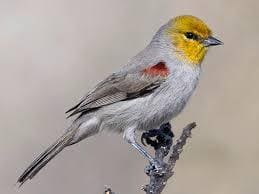
In Santa Cruz County, native bird species are talented at adapting to extremes in climate. One of the best examples of a songbird capable of withstanding and excelling in drastic climate extremes is the tiny Verdin.
Verdin
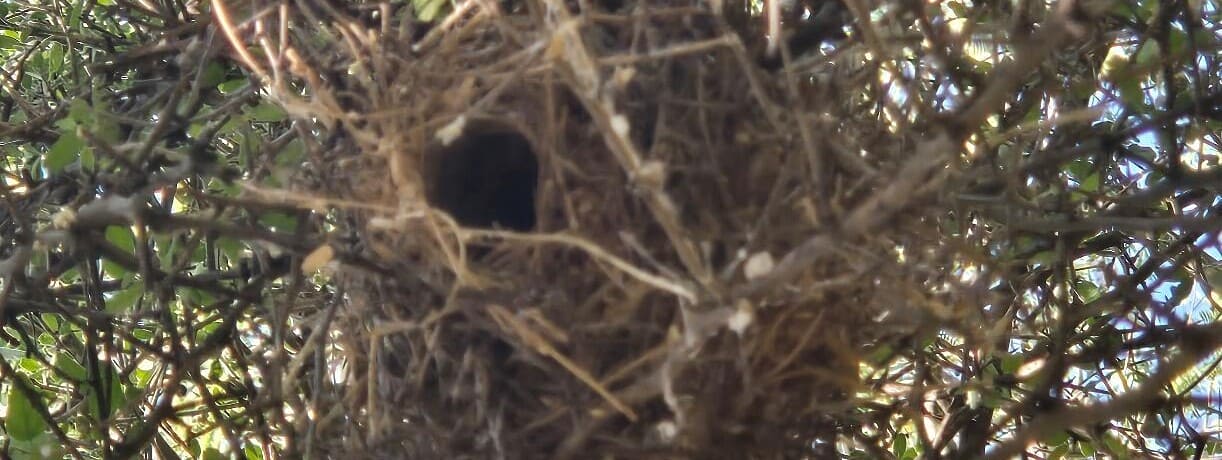
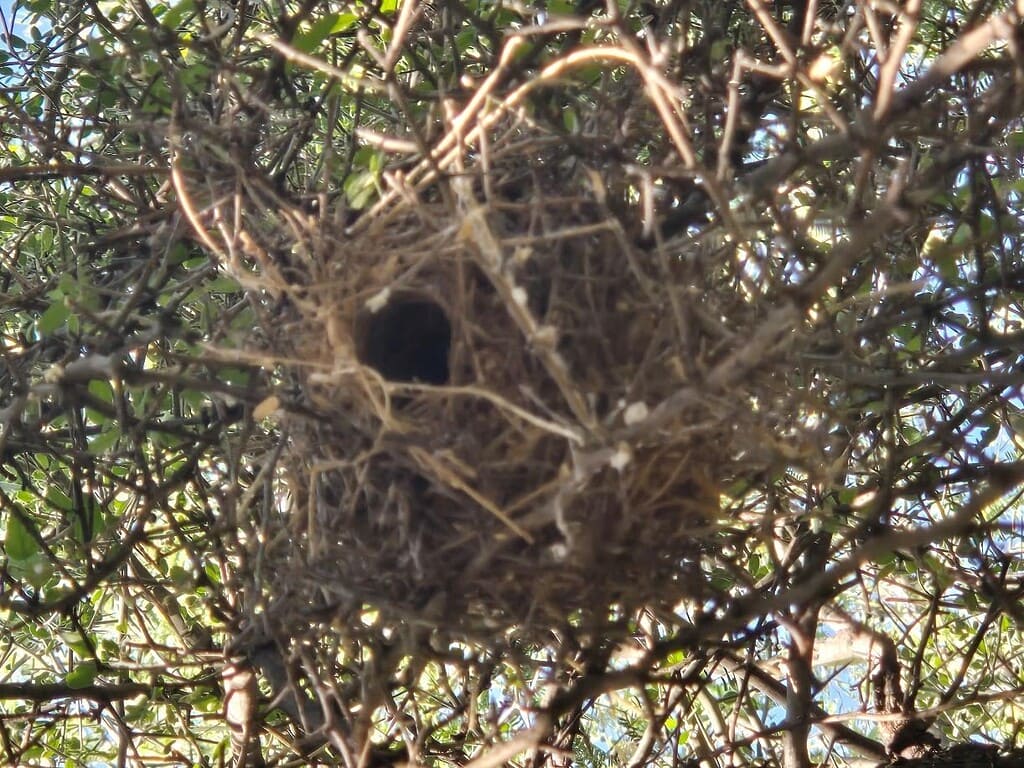
They are year-round residents famous for building multiple nests each year to provide seasonal climate control. In the winter, Verdins create thorny, globe-shaped roosts that are enclosed, multi-chambered nests lined with feathers and down. The entrances are strategically placed away from prevailing winds. Individual adults make these with thicker walls and extra insulation to reduce nighttime energy losses by 50%.
Architects and material scientists have studied the Verdin’s layered, air-pocket nests to better design biomimetic thermal and acoustic insulation using advanced mineral wools and smart building envelopes that regulate temperature without HVAC power. Not only humans, but other bird species have taken advantage of these prolific builders. Bewick’s Wrens, Lucy’s Warblers, and Black-tailed Gnatcatchers have been known to use abandoned Verdin nests on freezing nights.
In the summer, Verdins change up their nesting strategy and construct nests with doorways angled directly into the prevailing wind to promote passive airflow and ventilation. Nests are woven loosely, making them more permeable to allow heat to escape, and have thinner linings. They construct these nests using sparse outer twigs with wider gaps. Verdins will even abandon nests with less shade and retreat into deeper, more interior pockets of shade. This has been copied by building designers to allow for seasonal permeability, where slats or louvers are installed to allow heat to flow out, and strategic ventilation designs are employed to catch wind or maximize cross-ventilation.
Northern Mockingbird
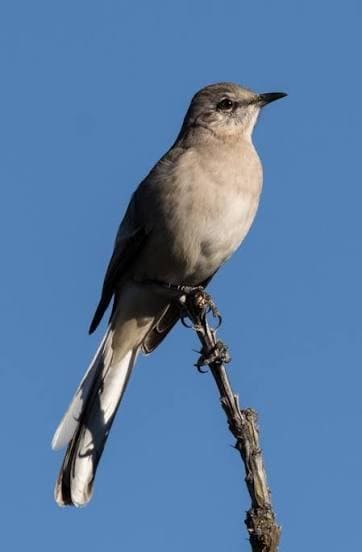
Mockingbirds could be considered master vocalists that use a special two-sided vocal organ to sing two notes at once and blend complex sounds effortlessly using simple air pressure instead of heavy muscle effort. By copying this two-part design, engineers build smaller, battery-saving voice devices that use two tiny vibrators to produce natural, human-sounding speech instead of a flat, robotic buzz.
The artificial voice synthesizer is called the Syrinx, named after the vocal organ found in birds, and scientists have programmed it to learn what a patient’s voice used to sound like in order to recreate a similar sound. Currently, at the University of Arizona Neuroscience Department, researchers are doing parallel work with songbird implants (using Zebra Finches) and studies of human voice synthesizers.
Even though our bioregion has an almost infinite number of examples of biomimicry (especially in birds), in this column we can only explore a few more in-depth. However, it is quite spectacular to study many of the biomimetic (imitating, modeling, or drawing inspiration from nature to solve human problems) innovations based on the resilience of Southwest creatures and especially bird species.
Hummingbirds
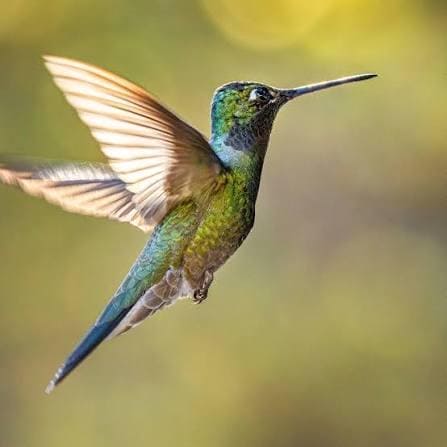
Unlike other birds, hummingbirds flap their wings in a figure-eight pattern and much more rapidly—about 20 to 80 wing beats per second. Sweeping their wings forward and backward like oars allows hummingbirds to create lift on both strokes. Such agile movements allow hummingbirds to hover and make tiny adjustments to their wing angle to twist and pivot directions quickly. Hummingbirds have joints that allow 360-degree rotation and independent wing control. Being able to change direction, hover, and fly into hard-to-reach spaces is a capability drone engineers have replicated by making bio-inspired flapping-wing drones and ornithopters (specifically designed to copy the hovering flight of hummingbirds).
Hummingbirds can also stop suddenly and maintain a hover in gusty winds or rain. Engineers mirror this by using AI flight control to give drones a similar balance in high winds. Drone engineers copy hummingbirds’ wings by pairing two independent micro-motors with flexible membranes to mimic the figure-eight movement, along with replicating their wing shape and proportions with ultra-light carbon-fiber frames. Watching some of these ornithopters or observing hummingbirds in flight is fascinating. Here is a video displaying a drone designed for search and rescue.
Southeast Arizona, and especially Santa Cruz County’s Sky Islands, are a hotspot for hummingbirds, where 15 different species can be found—more than anywhere else in the United States!
More locally, if you would like to observe hummingbirds, you can visit the Paton Center for Hummingbirds in Patagonia!
— From An Amateur Birding Friend Seeking Fellowship in the Flow
“We are pupils of the animals in the most important things: the spider in spinning and mending, the swallow in building, and the songsters, swan and nightingale, in singing, by way of imitation.”
Democritus (Ancient Greek philosopher)